Development of the HVDC Engineering Tool
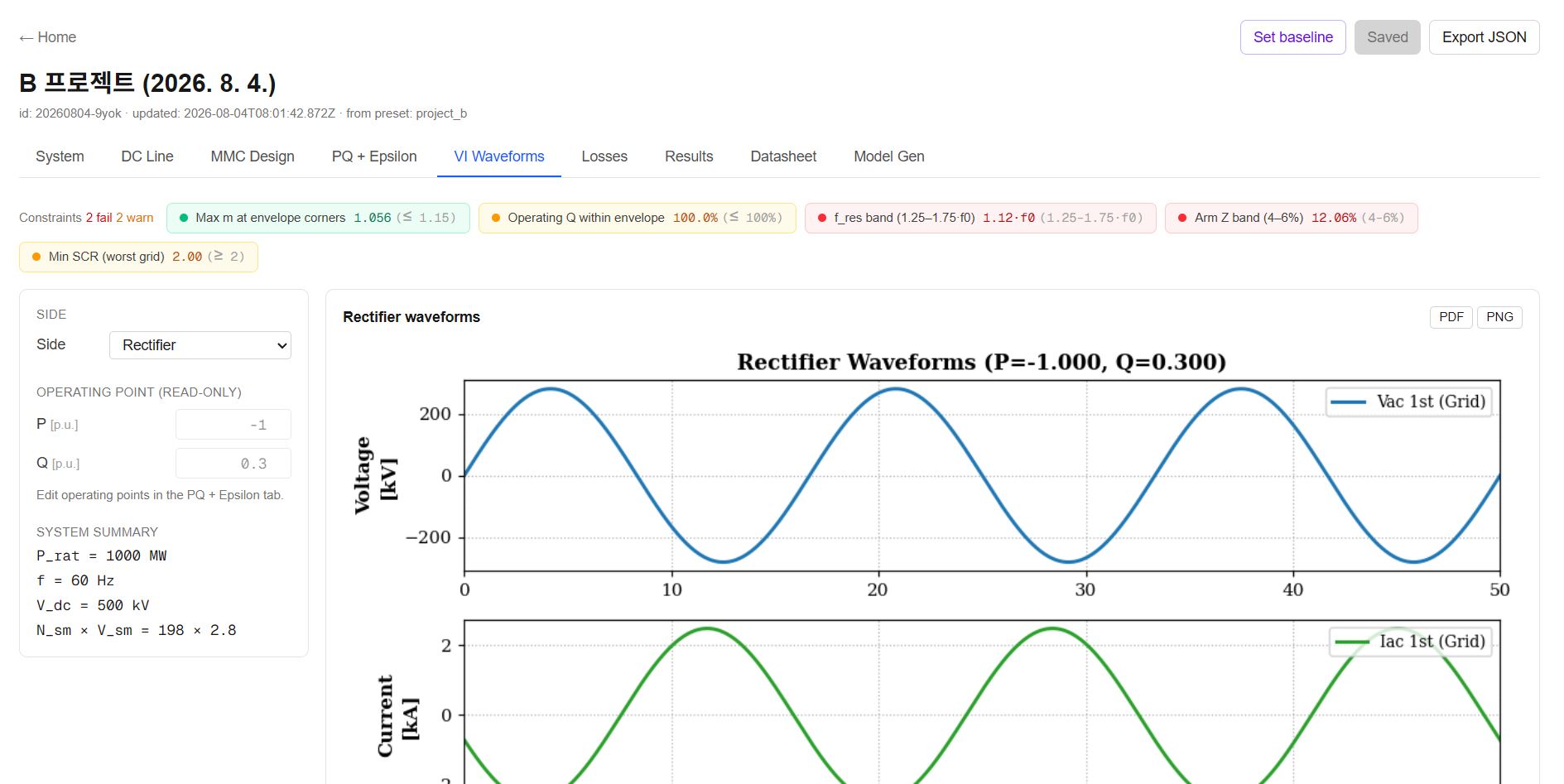
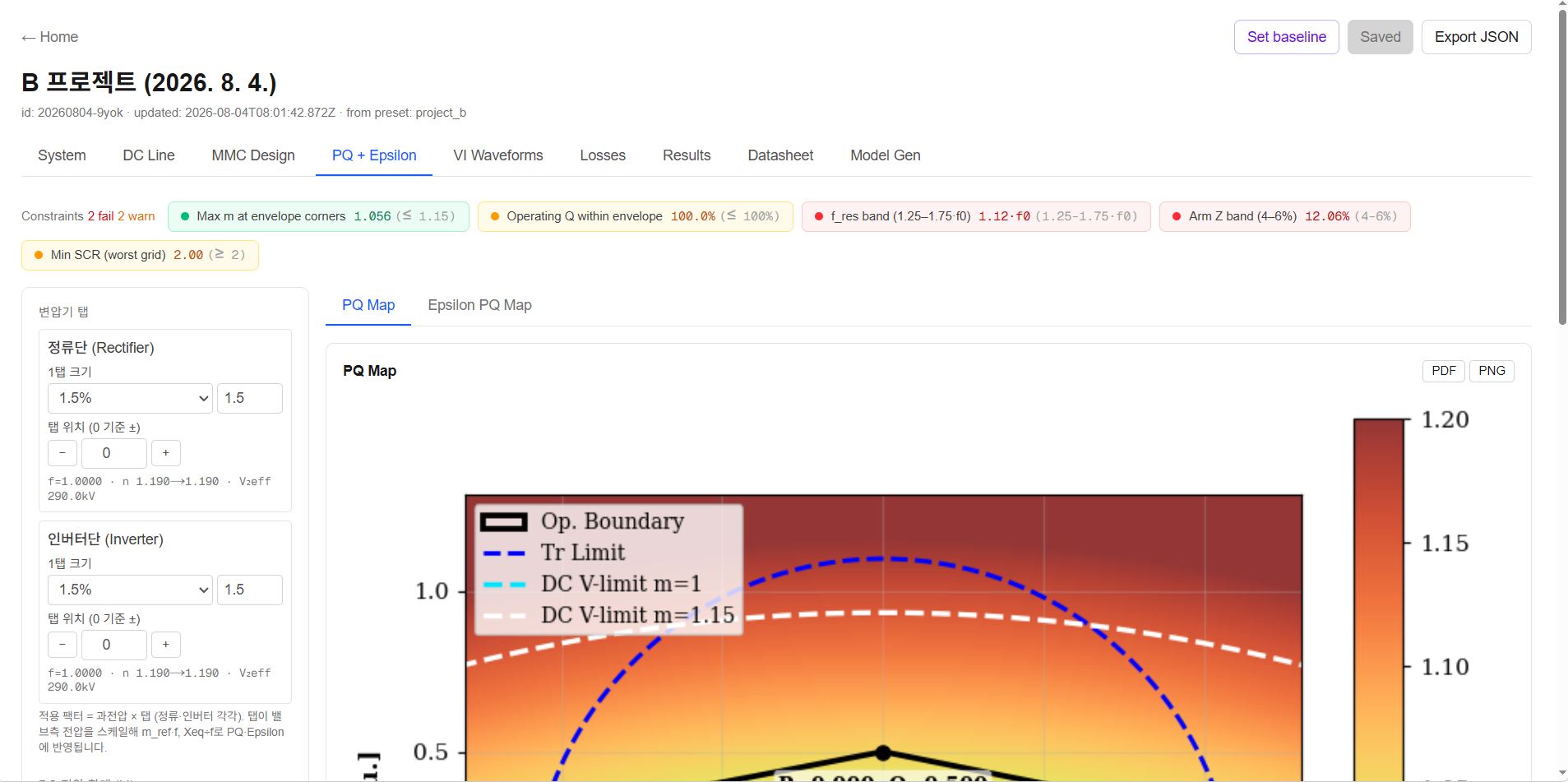
The Research Center developed a web-based HVDC design and verification tool that comprehensively evaluates system constraints, P-Q operating regions, DC line losses, and converter design results based on key MMC-HVDC design parameters. The tool can also generate PSCAD and PSS/E simulation models and design documentation.
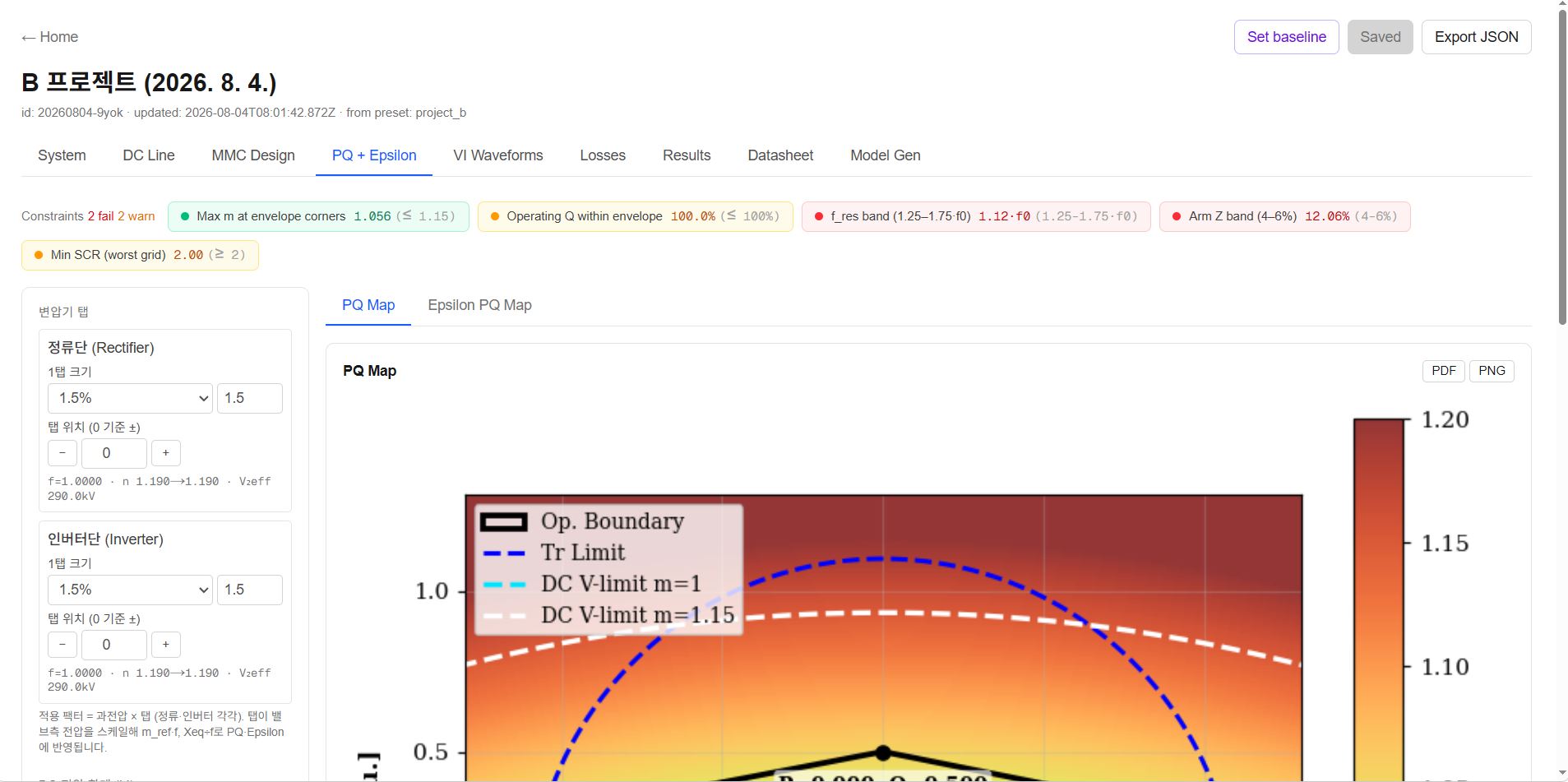
The Research Center developed a web-based HVDC design and verification tool that comprehensively evaluates system constraints, P-Q operating regions, DC line losses, and converter design results based on key MMC-HVDC design parameters. The tool can also generate PSCAD and PSS/E simulation models and design documentation.
What happened
The web-based MMC-HVDC design and verification tool developed by the Research Center is an integrated research platform that enables users to design HVDC systems and evaluate their key performance characteristics by entering system conditions such as the rated capacities of the rectifier and inverter, DC and AC voltage levels, transformer configurations, and grid strength. When a design parameter is modified, the tool automatically recalculates the P-Q operating region, modulation index, resonant frequency, arm impedance, and grid-strength-related constraints, allowing users to check compliance with the design criteria on a single screen. The tool also calculates current and power losses by considering the DC line topology, operating configuration, and line resistance, and incorporates the results into the P-Q operating-region assessment. Design results can be compared with a baseline model or previous analyses, while datasheets summarizing major circuit parameters and performance results can be exported in Word or Excel format. Based on the selected design parameters, the platform can also generate an MMC-HVDC model for PSCAD and a UDM model for PSS/E. It provides an integrated environment for managing the entire HVDC design and verification workflow, including the definition of design requirements, topology and parameter selection, performance assessment, PSCAD-based EMT simulation, result verification, and report generation. The tool is expected to reduce the time required for repetitive model development and validation while improving the consistency and reproducibility of the design process and its results.
Photo record
More from the activity