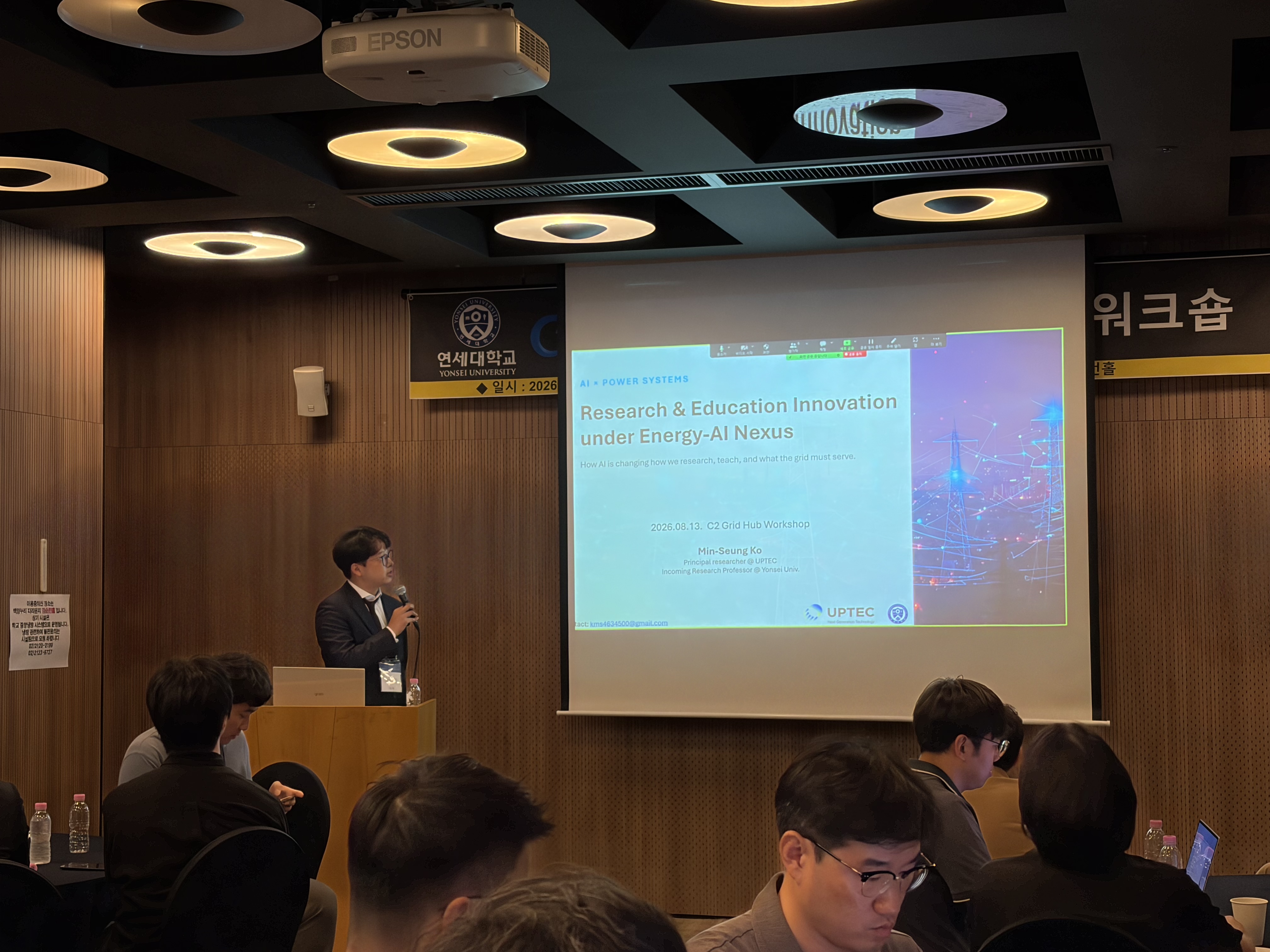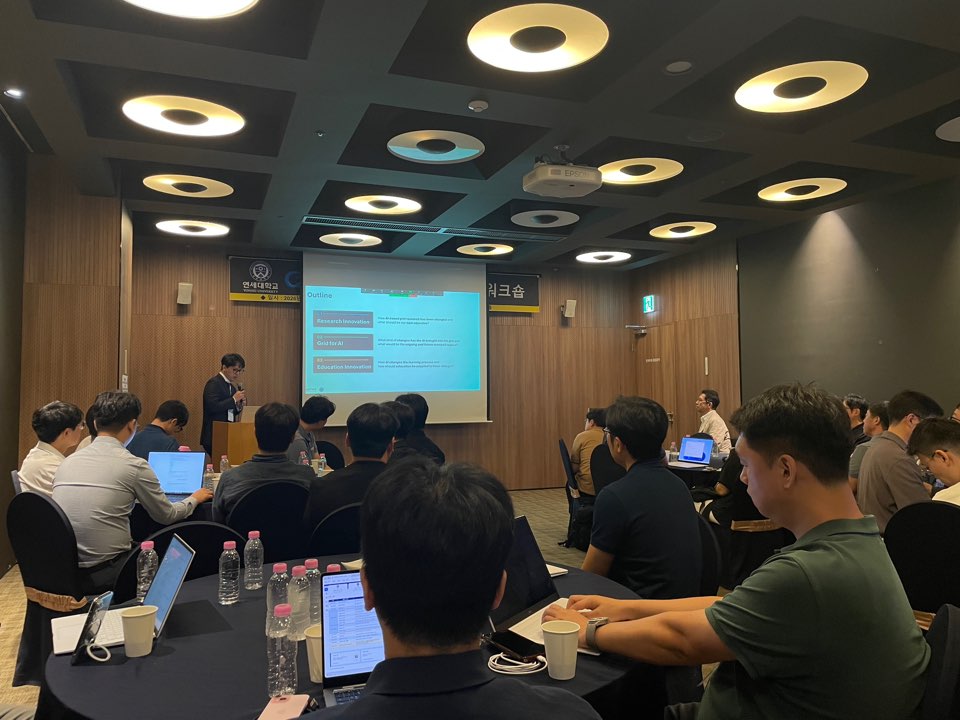
Special Session by Dr. Min-Seung Ko
Dr. Min-Seung Ko discussed how advances in generative AI and scientific AI are transforming power system research and education. He also presented emerging technical challenges posed by large-scale AI data centers and potential strategies for addressing their impacts on power systems.
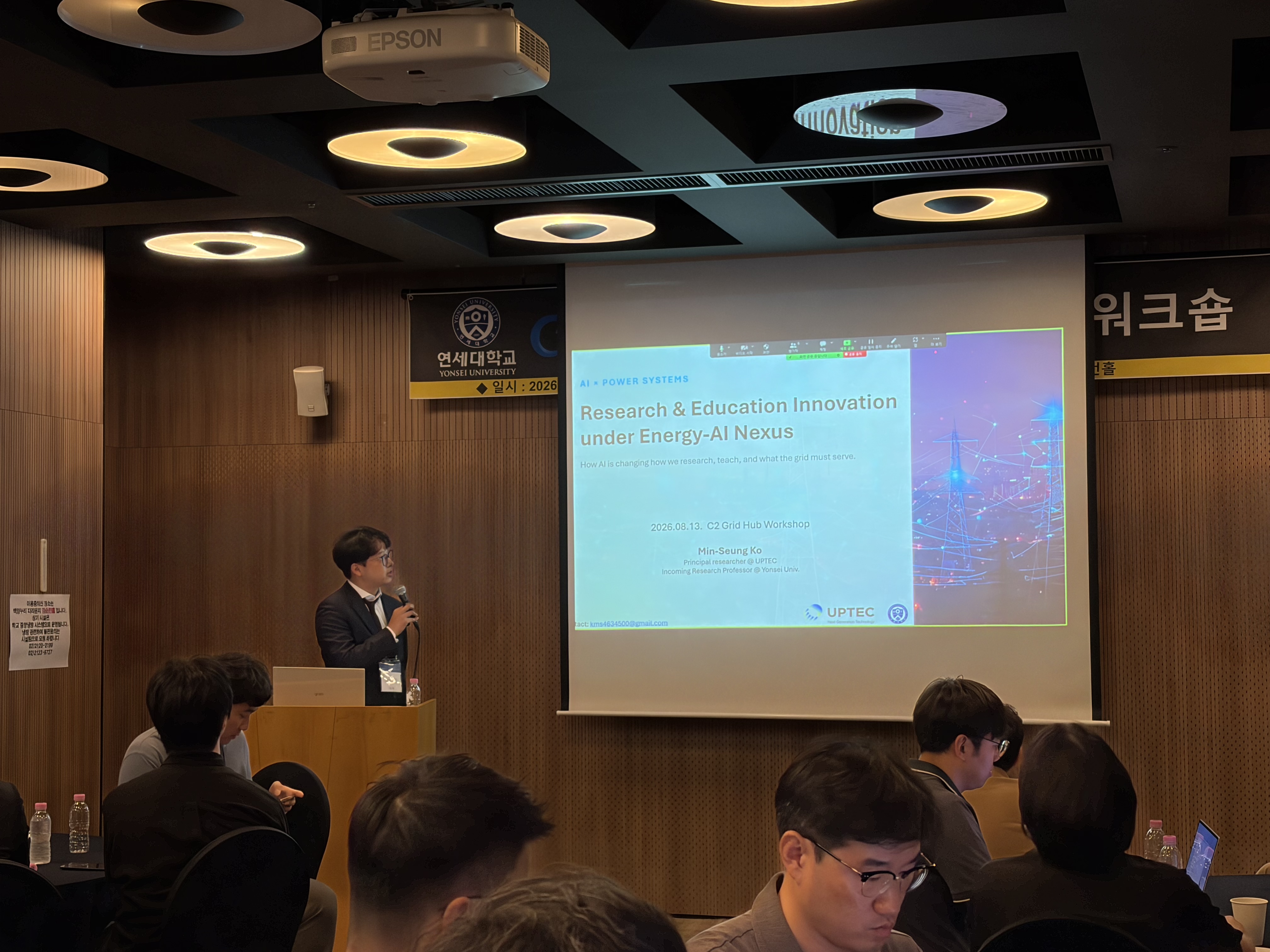
Dr. Min-Seung Ko discussed how advances in generative AI and scientific AI are transforming power system research and education. He also presented emerging technical challenges posed by large-scale AI data centers and potential strategies for addressing their impacts on power systems.
What happened
Dr. Min-Seung Ko delivered a special session entitled “Research & Education Innovation under the Energy-AI Nexus.” The presentation explored the changes arising from the convergence of energy and artificial intelligence from three perspectives: innovation in power system research, grids for AI, and innovation in education.
First, he explained that the use of AI in power system research is evolving beyond conventional applications such as load and renewable energy forecasting and fault classification. Emerging research areas include scientific AI, which integrates physical laws with data, and grid foundation models that can be adapted to a wide range of power system applications. He also discussed the long-term potential of autonomous grid agents capable of adapting to changing system conditions and supporting decision-making.
He then addressed planning, operational, and stability challenges arising as large-scale AI data centers emerge as a new category of high-demand grid load. In particular, he explained that rapid fluctuations in AI computing loads could cause wide-area power system oscillations and power imbalances. He emphasized the need for further research on power smoothing using energy storage systems, data center load control and standardization, and the use of data centers as controllable grid-support resources.
Regarding education, he proposed that generative AI should be used not merely as a tool for obtaining answers but as a collaborative partner that helps learners examine and expand their reasoning. He also emphasized the need to shift education and assessment away from memorization and information retrieval toward higher-order capabilities such as questioning, reasoning, critical review, verification, and creative problem-solving. The presentation highlighted AI’s multifaceted role as a research tool for analyzing power systems, a new type of load that power grids must accommodate, and a key driver of transformation across research, industry, and education.
Photo record
More from the activity